
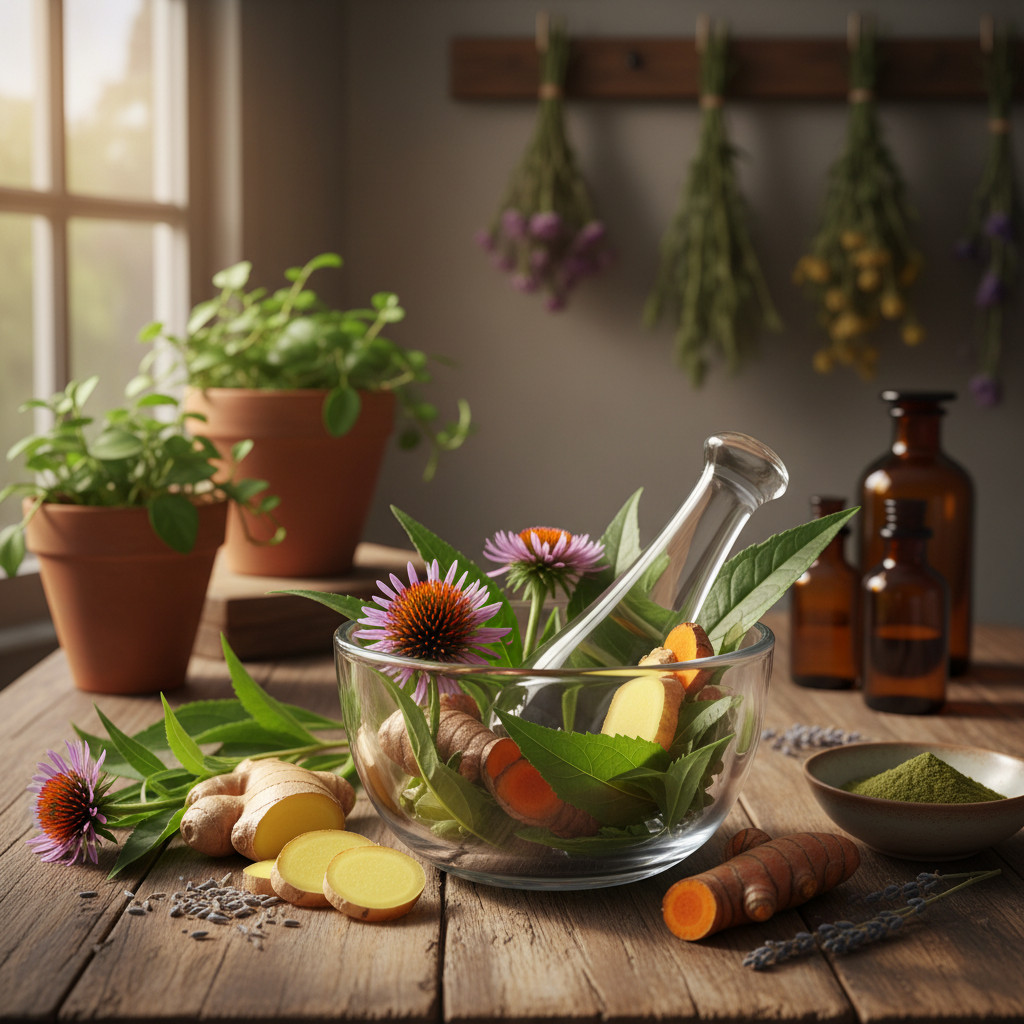
The Healing Herb Garden: 8 Plants to Grow at Home
You don't need a large garden to grow your own medicine. These eight herbs thrive on windowsills and patios and provide a powerful natural first-aid kit year-round.
The Healing Herb Garden: 8 Plants to Grow at Home
There is something profoundly grounding about growing your own medicinal herbs. To reach for a sprig of lemon balm when anxiety creeps in, or to steep your own chamomile before bed — these small acts reconnect us to nature and to our own capacity for self-care.
Here are eight herbs that are easy to grow in the UK climate and offer significant medicinal value.
1. Lavender (Lavandula angustifolia)
Growing: Full sun, well-drained soil. Thrives in pots. Drought-tolerant once established. Medicinal uses: Calming, sleep-supporting, anti-inflammatory. Add dried flowers to a muslin sachet under your pillow. Use the essential oil diluted in a carrier for tension headaches.
2. Chamomile (Matricaria chamomilla)
Growing: Sunny spot, poor to medium soil. Self-seeds prolifically. Medicinal uses: Gentle sedative, digestive soother, anti-inflammatory. Harvest the flowers and dry them for bedtime tea.
3. Lemon Balm (Melissa officinalis)
Growing: Any soil, partial shade tolerated. Can be invasive — best in a pot. Medicinal uses: Anti-anxiety, antiviral (particularly against cold sores), digestive support. Fresh leaves steeped in hot water make a delicious calming tea.
4. Rosemary (Rosmarinus officinalis)
Growing: Full sun, well-drained soil, coastal conditions. Medicinal uses: Circulatory stimulant, cognitive enhancer, antimicrobial. Research supports rosemary aroma improving memory and alertness. Also an excellent scalp treatment for hair growth.
5. Thyme (Thymus vulgaris)
Growing: Full sun, minimal water once established. Medicinal uses: Powerful antimicrobial and expectorant. Make thyme honey by infusing fresh sprigs in raw honey for two weeks — an excellent cough remedy.
6. Peppermint (Mentha × piperita)
Growing: Vigorous — must be grown in containers or it will take over the garden. Medicinal uses: Digestive antispasmodic (excellent for IBS), headache relief (applied topically), decongestant. Fresh tea after meals supports digestion beautifully.
7. Echinacea (Echinacea purpurea)
Growing: Full sun, well-drained soil. Perennial — returns each year. Medicinal uses: Immune modulator. Best used at the very first sign of illness, not continuously. A tincture of fresh root or aerial parts is more potent than most commercial products.
8. St John's Wort (Hypericum perforatum)
Growing: Sunny, well-drained conditions. Wild in hedgerows — forage sustainably. Medicinal uses: Traditional antidepressant herb with significant clinical evidence behind it. Infused in olive oil, it creates a brilliant red oil for nerve pain, bruises, and sciatica. Note: interacts with many medications — check before use.
Getting Started
Begin with three or four herbs that resonate with your current needs. Plant them together in a large terracotta pot on a sunny windowsill or balcony. Water moderately and harvest regularly — this encourages growth. Over a season, you'll build both a garden and an intimate knowledge of these incredible plants.