
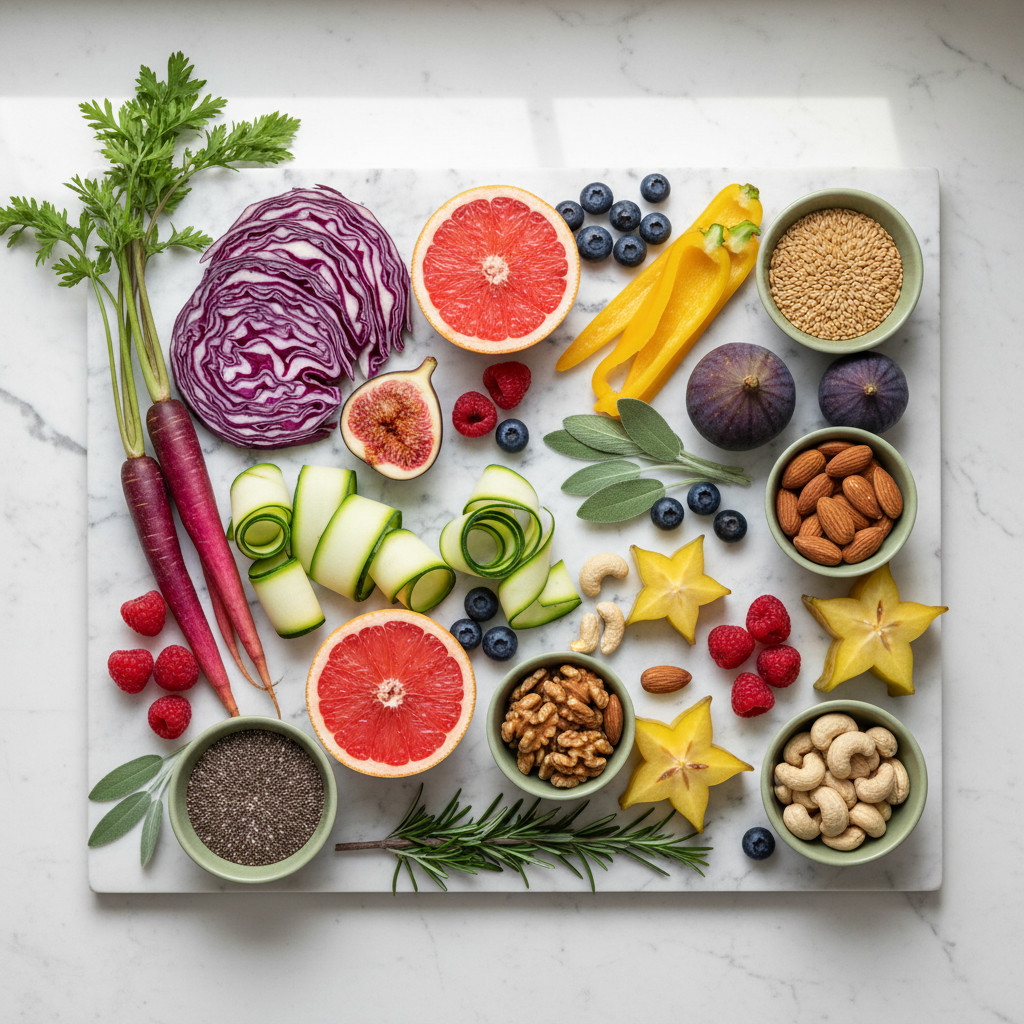
Eat the Rainbow: How Colour-Rich Foods Heal Your Body
Each colour of fruit and vegetable carries a unique set of phytonutrients. Discover how eating a spectrum of colours each day can transform your health from the inside out.
Eat the Rainbow: How Colour-Rich Foods Heal Your Body
Nature has its own colour-coding system when it comes to food. The vibrant hues of fruits and vegetables aren't just beautiful — they're signals of the powerful compounds hidden inside.
Why Colour Matters
Phytonutrients, the biologically active compounds in plants, are what give foods their distinctive colours. Each colour group corresponds to specific health benefits:
- Red (tomatoes, strawberries, red peppers): Rich in lycopene and anthocyanins, powerful antioxidants that protect the heart and may reduce cancer risk.
- Orange & Yellow (carrots, sweet potato, turmeric): Packed with beta-carotene which converts to vitamin A, supporting vision, immunity, and skin health.
- Green (spinach, kale, broccoli, avocado): Loaded with chlorophyll, folate, lutein, and vitamins K and C. Essential for detoxification and cellular repair.
- Blue & Purple (blueberries, aubergine, red cabbage): High in anthocyanins which cross the blood-brain barrier to support cognitive function and mood.
- White & Brown (garlic, onion, cauliflower): Contain allicin and quercetin, both potent anti-inflammatory and immune-supporting compounds.
Building a Rainbow Plate
Aiming for at least 5 different colours per day is a practical and enjoyable way to maximise nutritional variety. Start with breakfast — add berries to porridge, sliced banana and kiwi to yoghurt, or spinach to scrambled eggs.
At lunch and dinner, build your plate around colour. A base of dark leafy greens, topped with roasted orange and red vegetables, with a scattering of purple onion and fresh green herbs gives you five colours in one bowl.
Practical Tips
- Seasonal shopping: Colours shift with seasons. Winter calls for dark greens, root vegetables, and purple brassicas. Summer brings red berries, yellow courgettes, and orange melons.
- Raw vs cooked: Some nutrients (like lycopene in tomatoes) become more bioavailable when cooked, whilst others (like vitamin C in peppers) are better preserved raw. Varying how you prepare your produce maximises benefits.
- Frozen counts: Frozen fruits and vegetables are often flash-frozen at peak ripeness and retain most of their nutritional value.
The Gut Connection
Perhaps the most significant benefit of a diverse, colourful diet is the impact on your gut microbiome. Different phytonutrients and plant fibres feed different species of beneficial bacteria. Greater dietary diversity equals greater microbiome diversity — and that diversity is strongly linked to mental clarity, mood regulation, and long-term disease prevention.
Getting Started
This week, count the colours on your plate at each meal. If you're seeing mostly beige and brown, that's your invitation to add one new colour per day. Over 7 days you'll have reset your relationship with food — and your body will feel the difference.